

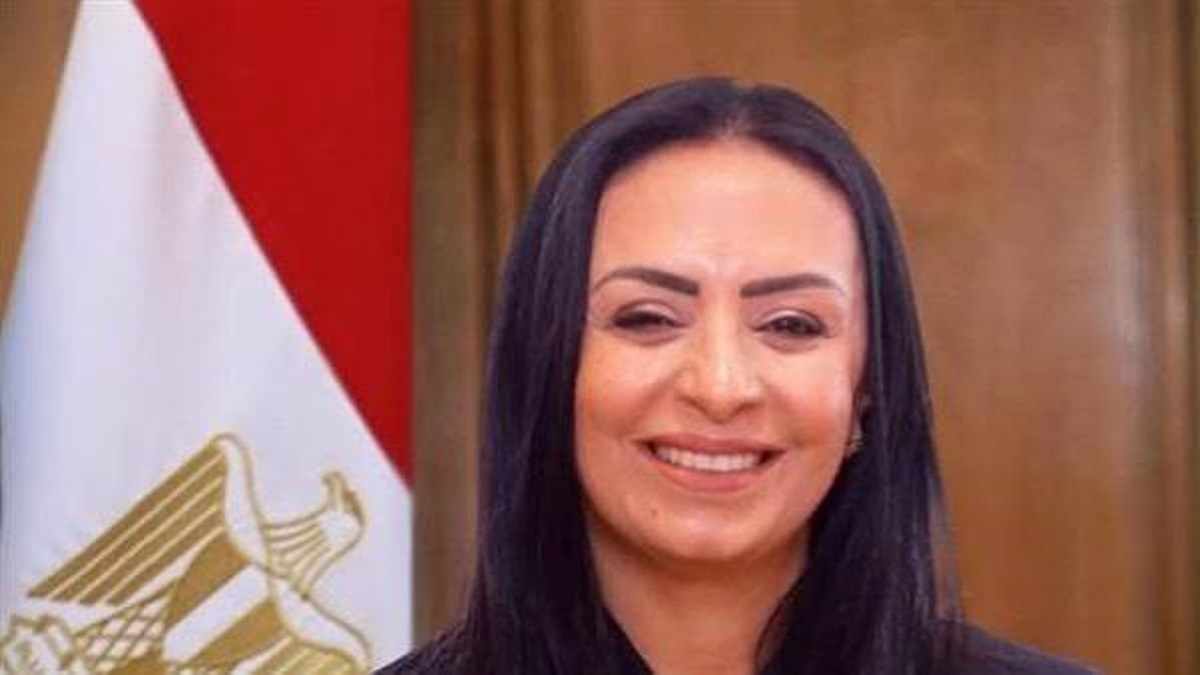
Dr. Maya Morsy, Minister of Social Solidarity, received a report from Khalil Mohamed, Head of the Central Administration for Persons with Disabilities, outlining the Ministry’s key efforts and services for deaf and hard-of-hearing people. The report coincides with the celebration of the International Day of Sign Languages, observed annually on September 23, under this year’s theme: “Toward a More Communicative, Accessible, and Inclusive Society.”
The occasion aims to raise awareness of the importance of sign language as a fundamental means of communication for deaf and hard-of-hearing people and to emphasize their right to equal access to information, services, and opportunities, thereby promoting their participation and inclusion in society.
Sign language is an essential part of the identity and culture of deaf people. It is also an important means of expression, learning, communication, and participation in various aspects of life. Providing access to sign-language communication helps remove many of the barriers faced by deaf and hard-of-hearing people and supports their rights to education, employment, services, and community participation.
In this regard, the Ministry of Social Solidarity places significant emphasis on persons with disabilities, including deaf and hard-of-hearing people, through a range of programs and interventions aimed at supporting their rights, enhancing their capabilities, and providing the accessibility measures necessary for their inclusion in society.
The Ministry provides language-development and rehabilitation services for deaf and hard-of-hearing people through 125 language centers nationwide, which have served 12,026 beneficiaries. These services include early screening, hearing assessments, language and communication skills development, appropriate training methods, and rehabilitation and training services through six institutions for deaf and hard-of-hearing people. These services include developing auditory and expressive skills and providing vocational training in professions suited to their abilities and labor-market needs, in addition to guidance and counseling services for families of people with hearing disabilities.
The Ministry also provides hearing aids and assistive hearing devices through NGOs and civil society organizations operating under its supervision, along with training on how to use them. As part of efforts to expand support services, a medical caravan was organized in cooperation with the Life Makers Foundation and the Port Said Directorate of Social Solidarity, during which 150 people received medical examinations. The Ministry also launched an initiative to provide 1,500 hearing aids for children in Upper Egypt in cooperation with the Egyptian Healing Bank Foundation under the Ministry’s supervision.
In addition, coordination was carried out with the “Ata’a” Charitable Investment Fund for Persons with Disabilities and the Asdaa Association to provide external components and spare parts for cochlear implants for 142 cases, while the external components were upgraded for 68 cases.
The Ministry also supports the right of people with hearing disabilities to university education. During the 2025/2026 academic year, 84 sign-language interpreters were provided to support 587 deaf and hard-of-hearing students at 13 Egyptian universities.
Social protection is also provided to people with hearing disabilities and their families by directing eligible beneficiaries to social-protection programs, including the “Karama” cash-transfer program and monthly assistance, in accordance with eligibility rules and requirements. This contributes to supporting the most vulnerable families and strengthening their ability to cope with living expenses.
Regarding the economic empowerment of young people with disabilities, they are directed toward economic-empowerment programs, small and micro-enterprises, and productive-family initiatives. They are also given opportunities to participate in exhibitions organized by the Ministry to showcase their products and encourage employment, production, and economic independence.
The Ministry has also launched the “Taheel” electronic employment platform in coordination with the Ministry of Communications and Information Technology and the Ministry of Labor. The platform aims to help people with disabilities access employment opportunities suited to their abilities and qualifications, thereby enhancing their integration into the labor market.
The Ministry has also implemented training programs to teach the principles of sign language to employees at the Ministry’s headquarters and staff who directly interact with people with hearing disabilities. Six training programs have been conducted for 145 employees, with plans to expand these programs to include employees of social-solidarity directorates nationwide.
Work is also underway to develop a unified sign-language dictionary to standardize sign vocabulary and promote its wider use. A roadmap is being developed for issuing a unified sign-language dictionary to serve as a reference for sign language in Egypt. The Ministry is also working to establish an electronic platform for official sign language and provide guidance and counseling services to families of people with hearing disabilities, helping them better support their children, develop their skills, and strengthen their communication and independence.
The Ministry is working to facilitate access for people with disabilities to the services and accommodations provided under Law No. 10 of 2018 on the Rights of Persons with Disabilities and its executive regulations through the Disability and Integrated Services Identification Card. This includes enhancing accessible communication methods, such as providing sign-language interpreters when delivering services to deaf and hard-of-hearing people.
The Ministry of Social Solidarity emphasizes that strengthening communication through sign language is an important pillar for supporting the rights of deaf and hard-of-hearing people and enabling their active participation in all areas of life. This enhances their opportunities in education and employment, access to services, and independence.
On the International Day of Sign Languages, the Ministry reaffirms its commitment to continuing its efforts to raise public awareness and improve access to communication and services for deaf and hard-of-hearing people, contributing to building a more inclusive, equitable, and accessible society for all.
🖋️Source: The National Media Authority Online Portal