



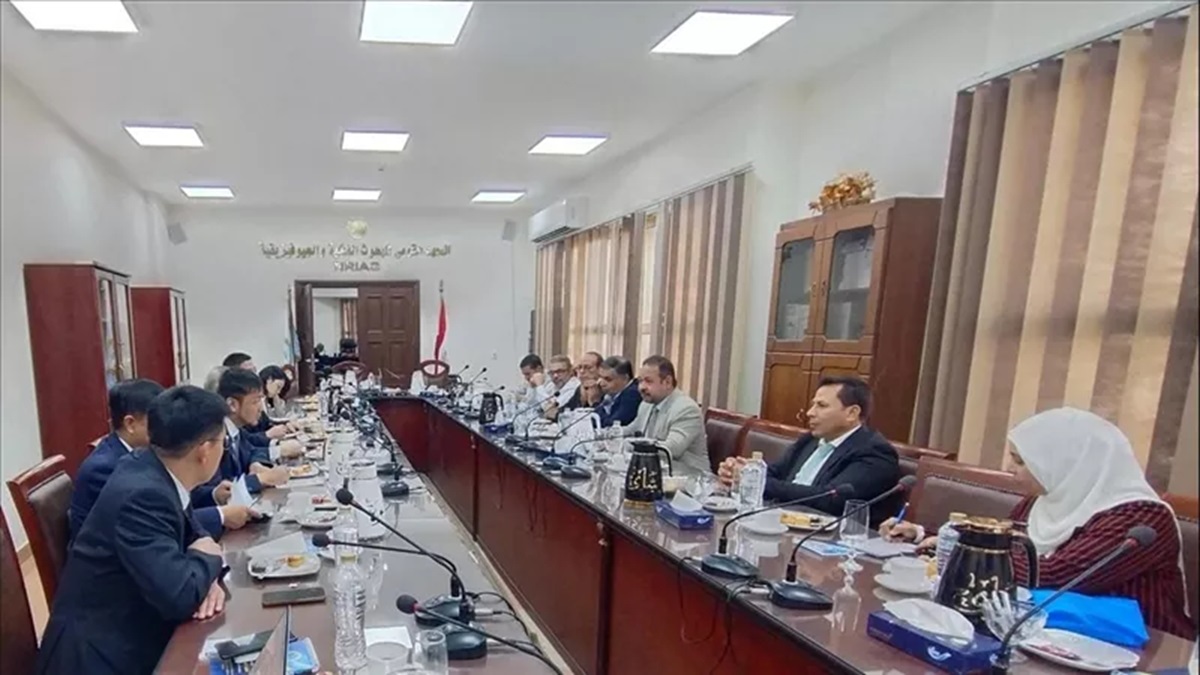
The National Research Institute of Astronomy and Geophysics (NRIAG) has signed a Memorandum of Understanding (MoU) with the China Earthquake Administration to expand cooperation in earthquake monitoring, data exchange, expertise sharing, and training, as well as to develop early warning technologies and reduce earthquake risks.
The MoU was signed on the sidelines of an international workshop organized by the institute under the title “The Development of Egypt’s Earthquake Monitoring System Since the October 12, 1992 Earthquake: Toward Advanced Early Warning Systems and Prospects for Egyptian-Chinese Cooperation.” The workshop coincided with the 34th anniversary of the October 1992 earthquake and was attended by a high-level Chinese delegation.
Dr. Bassem Nabawy, President of the National Research Institute of Astronomy and Geophysics, stressed the importance of developing early warning systems that make it possible to utilize the seconds before destructive seismic waves arrive, helping strengthen protective measures and reduce human and material losses.
He also highlighted the institute’s strategic role in monitoring seismic activity and supporting decision-makers, building on the scientific legacy of the Helwan Observatory, established in 1903.
For his part, Wang Kun, Head of the China Earthquake Administration, presented China’s experience in developing early warning systems and deploying them to protect infrastructure and historic structures. He emphasized the importance of joint cooperation in reducing earthquake risks and strengthening communities’ ability to respond to them.
The workshop reviewed the development of Egypt’s earthquake monitoring system since the 1992 earthquake, which marked a turning point in enhancing monitoring capabilities and preparedness for seismic hazards. Dr. Rashad Qubaisi, Professor of Geophysics and former head of the institute, outlined the evolution of monitoring stations from paper-based recording systems to modern, high-precision digital technologies.
Qubaisi stressed the importance of continuing seismic studies related to the High Dam area and utilizing data accumulated over approximately 45 years to assess risks and support protective measures.
The workshop also addressed efforts to protect Egypt’s cultural heritage from natural hazards. Dr. Ayman Ashmawy, Advisor to the Secretary-General of the Supreme Council of Antiquities, explained that cooperation between the council and the institute, which has been ongoing for approximately three years, aims to develop a seismic risk map for archaeological sites to assess the vulnerability of historic buildings to natural hazards and support preservation efforts, particularly for buildings affected by the 1992 earthquake.
The workshop featured two scientific sessions. The first examined the development of Egypt’s National Seismic Network since 1992, leading to the modern digital system, as well as future challenges related to strengthening monitoring and early warning capabilities.
The second session, delivered by Dr. Zhang Rui of the China Earthquake Administration, presented China’s experience in developing early warning systems and their applications in protecting critical infrastructure, including high-speed railway lines, nuclear facilities, and major dams.
Participants from the Chinese side included Wang Kun, Head of the China Earthquake Administration; Ren Hongtao, Science and Technology Counselor at the Chinese Embassy in Egypt; and Han Hongqi, First Secretary at the embassy.
🖋️ Source: Al-Gomhuria Portal